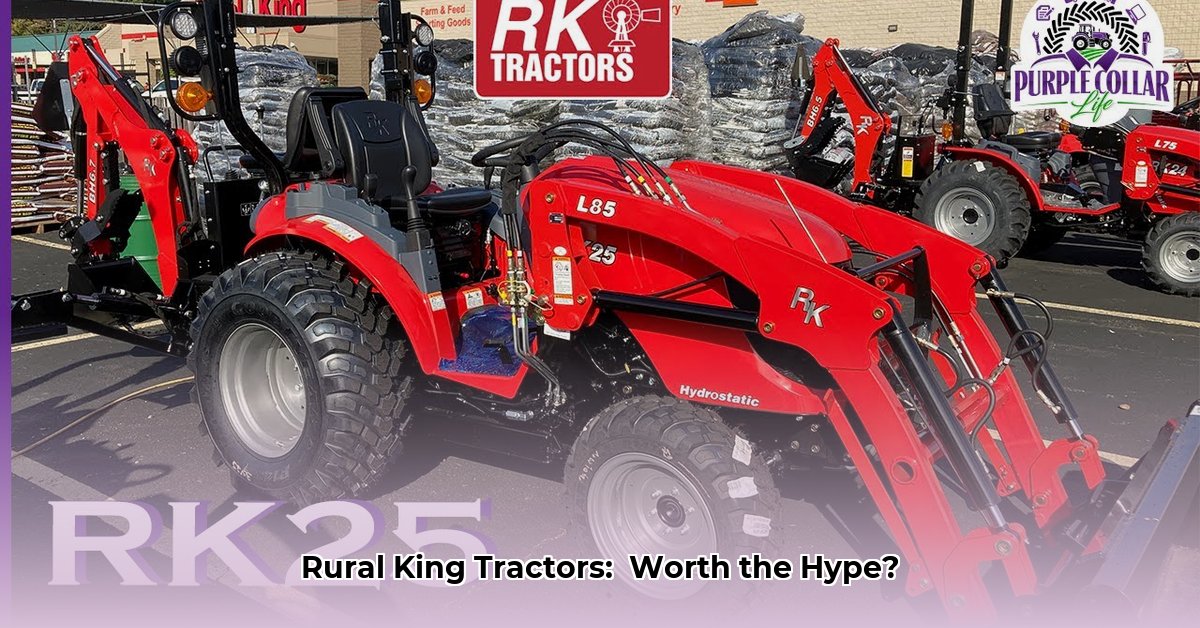
Thinking about a Rural King tractor for your small farm? This in-depth review examines their affordability, ease of use, and potential drawbacks to help you make an informed decision. We'll analyze user experiences, compare them to competitors, and offer actionable advice. For more tractor reviews, check out this helpful resource.
Affordability and Features: Value for Money?
Rural King tractors are known for their competitive pricing, often significantly lower than comparable models from established brands. This affordability stems from streamlined manufacturing and a direct-to-consumer sales model. However, this lower cost might come at the expense of some features found in higher-end tractors. While many models boast standard features like rear remotes, work lights, and surprisingly, some even include integrated audio systems, a thorough comparison of specifications across models is crucial. Does the lower price justify potential compromises on features or long-term reliability? That's a question each potential buyer must answer.
Ease of Use and Operation: Intuitive Design?
Many users praise the intuitive operation of Rural King tractors. Controls are generally considered simple and easy to learn, even for novice operators. The comprehensive owner's manuals further enhance ease of use. While the power output may be less than larger tractors, for smaller farms handling everyday tasks, this simplicity becomes a valuable asset. "The intuitive controls were a lifesaver for me, a first-time tractor owner," says Sarah Miller, owner of Sunnyside Farm. However, experienced farmers might find its capabilities limited for large-scale applications.
Parts Availability and Service: A Potential Bottleneck?
A significant concern surrounding Rural King tractors is parts availability and service response times. Unlike major brands with expansive dealer networks, Rural King's service infrastructure presents potential challenges. Longer wait times for repairs and the potential difficulty in locating authorized dealers are often reported. "Parts procurement was a headache," comments John Davies, a long-time Rural King tractor owner. "Downtime cost me valuable farming time." This emphasizes the importance of location and potential reliance on independent parts sourcing. Is the convenience of a local Rural King store enough to mitigate this risk? That’s a critical factor to consider based on individual circumstances.
Long-Term Reliability and Resale Value: A Long-Term Investment?
The long-term reliability of Rural King tractors remains a point of debate. While some owners report years of satisfactory performance, concerns regarding transmission and electrical system issues are frequently raised. This uncertainty directly impacts resale value. The lack of widespread brand recognition and potential repair difficulties could lower resale value compared to well-established competitors. Given this uncertainty do the short-term cost savings outweigh the potential long-term risks?
Sustainability Considerations: A Role in Sustainable Farming?
Rural King tractors can contribute to sustainable small-scale farming practices. Their affordability makes them a viable option for beginners and environmentally-conscious farmers promoting sustainable practices. Their smaller size and maneuverability are beneficial for smaller farms, limiting soil compaction and promoting efficient crop rotation. However, their reliability can negate these advantages if consistent repairs and downtime cause increased fuel consumption and reduced overall efficiency. Does the cost of maintenance potentially undermine their contribution to sustainable practices? This is a critical question to ponder.
Conclusion: A Balanced Perspective
Rural King tractors offer a compelling value proposition for budget-conscious small-scale farmers seeking an easy-to-use machine. However, the potential challenges related to parts availability, service response times, and long-term reliability cannot be ignored. The choice depends on individual priorities, risk tolerance, and the specific needs of one's farm. A detailed analysis of your farm's scale, local resources, and long-term investment goals is paramount before making a purchase.
Actionable Recommendations: Your Decision-Making Guide
- Assess your budget: Are you prioritizing affordability above all else?
- Determine your farm's scale: Do you need a high-horsepower tractor for large-scale operations or a smaller machine for smaller tasks?
- Evaluate local service options: Can you easily access parts and service in your area? If not, what alternative strategies can you employ (independent mechanics, stockpiling parts)?
- Consider long-term implications: Are you willing to accept the potential risks associated with long-term reliability and resale value?
- Compare features and specifications: Carefully compare Rural King models to those of competitors based on your specific needs.
By carefully evaluating these factors, you can make an informed decision that aligns with your farming operation's requirements and your risk tolerance.
Note: This review is based on publicly available information and user experiences. Individual results may vary. Always conduct thorough research before making a significant purchase.